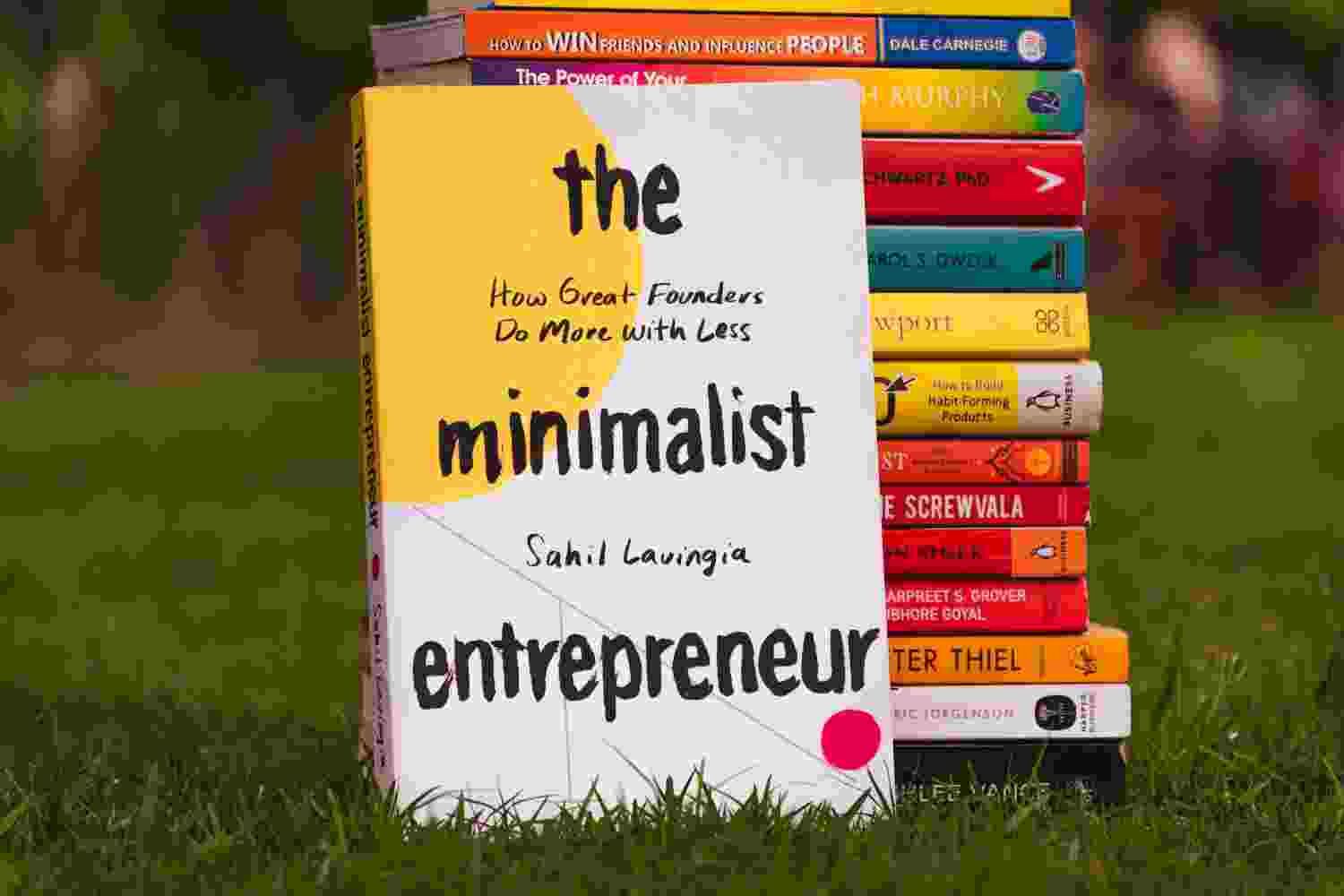
Detailed information about Entrepreneurship development is given in the article below with broad views:
Entrepreneurship Development: Many things need to be known about becoming an entrepreneur:
An exciting and motivational business start-up idea will come and go, but an entrepreneur is obliged to make decisions, understand customer needs, manage finances, address issues, communicate effectively, and adapt, etc. These are skill areas, and skills are only learned through practice, learning, trying, and failing.
What comes to mind when entrepreneurship development?
Entrepreneurial skill development and the acquisition of entrepreneurial knowledge are called Entrepreneurship development. This may be connected to knowledge of creating business plans, financial abilities, leadership skills, knowledge of customers, marketing and communication skills, decision-making, risk management, time management and problem solving, or adaptability.
For instance:
A founder may have an amazing product but lack basic marketing skills, or a leader may know how to sell but have poor management skills.
The reality is that entrepreneurial development is needed throughout the lifetime of a business because things change, and so do customer expectations, and a founder has to change as well.
1-Start With a Problem, Not a Business Idea:

Many of the new business owners become passionate about a concept before they even test to see if there is a business need for it. Somebody might tell me that they want to create a productivity tool, but they don’t even consider what kind of people would use it, what they would use it for, what other productivity apps they see on the market, how much they would pay for it, why they would choose it over the other apps, or how often they would use it.
2-Get to know your target customer:
One of the pitfalls that many of those starting face is attempting to please everyone. In fact, unless a business attracts a circle of customers willing to buy its products, it will most likely fail. The business owner or the founder must know what his target audience is. What is the need of the people he targets, and what service will he provide? Knowing the preference of customers is very important.
For instance:
Understanding the target market can be useful for helping to establish realistic expectations in customers and enhance the product or service.
Let’s say that someone sells online accounting software. While a small freelance designer might just want to log in and out of the business, a company with dozens of employees will probably need more in-depth payroll and accounting tools.
Different customer segments may have different needs and budgets for the same product category. Don’t think that customer research has to be complicated: surveys, interviews, online comments, emails to customer support, website analytics, and real-time conversations can be very informative.
3-Understand how to create a business model:
A great product/service is the first half of the equation. A founder must understand how money moves through a business, where a business gets its money from, what it is worth to them, and what they have to spend to make a product or service. They should also consider methods of new customer acquisition and how the business will generate revenue at different levels and stages. A founder should ask himself or herself the following questions when learning how to build a business model:
- What am I selling?
- Who is paying for it?
- Can the business make money at scale?
A business model should be simple enough for you to explain to someone else. If not, you will probably have to make changes to it.
For example:
An online software business can generate revenue by offering customer support and subscription types, while a freelance designer could earn it by providing project services.
Earning money from an education site can be achieved through subscriptions, ads, and affiliate marketing.
4-Understand the fundamentals of financial education and profitability:

Financial management is one of the most crucial skills of an entrepreneur, and a founder doesn’t have to be a financial expert to learn the basics. They at least should learn about the revenue and expenses of the company, savings, debts, profits, cash flow, customer acquisition cost, pricing, etc.
According to the OECD’s 2025 work on SME growth and scaling, finance, skills, innovation, and digitalisation are key areas of interest for understanding how firms engage in growth processes.
5-To understand how to make better decisions:
From day-to-day decisions to those that are of strategic importance, founders will have to make numerous decisions. Being right more often isn’t key to the ability to make effective decisions; it’s about being able to avoid making hasty decisions without proper analysis.
When faced with an important decision, a founder should strive to ask the following questions:
- What do I know?
- What am I assuming?
- What could go wrong?
- What will it cost? What am I missing?
6-Learn How to Minimise Risks:
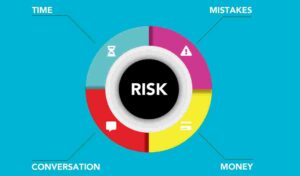
If you use a small amount of money to test a new product, there is a risk that it might not sell, but the risk is low. And if the product succeeds, taking that risk will prove beneficial—meaning the risk you took was justified by the product’s performance. However, if you start a business by taking on a large amount of debt, the risk doubles; should you incur a loss, you could find yourself in serious trouble.
7-Learn how to talk nicely with people:

It’s a founder’s responsibility to communicate with pretty much anyone – customers, employees, suppliers, partners, investors, freelancers, and others. Effective communication skills are crucial; According to the OECD work on skills for SMEs, skills needs are evolving with the emergence of digital entrepreneurship, new business models, and technology-intensive services into 2025.
8-Understand marketing and its role in business development:
Marketing is a process of exposing your product/service to the right customer. It should be tailored to the target market and can include search engine optimisation, social media marketing, emails, content marketing, advertising, partnerships, referrals, and marketing in the community.
A founder doesn’t have to be an expert in all the marketing aspects to be successful. Rather, they ought to concentrate on the channels that their target customers use and dedicate time and effort to these channels. For instance, if your company caters to professionals, you may perform better on LinkedIn than on a social network that’s focused on entertainment. Every marketing experiment should be done to test the best channels and content to reach customers, especially by the founder.
In a competitive market, where there are multiple choices for the customer, and they will only be drawn to a business on the basis of its value proposition, it is crucial.
9-Understand the Value Proposition:
A value proposition is a summary of what a company offers to its customers. A weak value proposition would be something like, “We offer high-quality digital marketing services,” whereas a strong one would explain who the service is for, what problems it solves, and what results customers can expect.
The most important question a value proposition should answer is, “Why should I choose them over the competitors?” And an effective one will allow a prospective customer to understand this quickly. This is critical in a competitive environment when customers have more options and will only choose a business based on its value proposition.
10- Avoided making repetition of errors:

Learnt from them: Failure is the first step to success. There may be reasons for the failure of a product to sell, the failure of an advertising program to get customers to buy a product, or the failure of a partnership that can’t be known.
Learning how to learn from business failure involves studying what went wrong, why it went wrong, what assumptions were wrong, and what should be changed when trying to do it again in the future. Failure should not be viewed as a bad thing, but as a great learning opportunity that will not be possible through any other means.
Understanding the situation is the most crucial component when it comes to learning from mistakes and applying this understanding in other situations.
11- Understand How to Allocate Time and Priorities:
The entrepreneurial person is the one who has the quality of knowing where to invest his time. He spends his time very efficiently, and he spends more time on improving the product and customer service, etc.
For instance:
While it may seem productive to respond to all customer requests right away, a founder gets more done by focusing on product development or engaging in meaningful conversations with important clients instead of putting out every fire that comes their way.
A founder should make a list of tasks in which they can tick off items as they complete them, and a simple way to do that is to identify the two or three most important tasks they should focus on for the day.
13- Consider Future Growth:

It’s simple to think of attracting one customer to your business, but you need to be thinking of the bigger picture if you want to stay successful. As businesses grow, take into account the following questions:
- Can the structure support rising sales?
- Will expenses rise dramatically?
It is important to also recognise the fact that new business creation is only one element of the wider economic environment.
14- Measure Progress:

You cannot improve what you have not measured.
The specific metrics which are relevant to your business will vary, but some common examples include:
- Revenue per month
- Profit margin
- Customers acquired
- Repeat purchases
- Website visits
- Conversion rate
- Customer acquisition cost
- Retention rate
- Refunds
The metrics shouldn’t just be picked at random; they have to be scrutinized to see how they can be improved.
15-Make it small at first, then get better:
It is not necessary to have a perfect business plan in place before starting the business, but it is important to realize that any business idea may need improving. Do not spend a lot of time and money on an early prototype – opt for a scaled-down version and then run with it, further developing it later.
For instance:
Rather than a full programme of online courses, you may wish to begin with a small workshop and see if there is demand for a larger product.
How to learn from business by reading the newspaper:

Wisdom entrepreneurially from newspapers. An enterprise-minded person does not have the attitude that he has learned everything. Rather, their thoughts ought to be directed towards acquiring knowledge, collecting customer feedback, and enhancing their product on their own. They should think of various suggestions, learn from their errors, and seek to stay away from repeating them.
To showcase entrepreneurial thinking in improving the environment, the following are questions to address:
- “What can I learn from this?”
- “What data supports this claim?”
- “How can I improve the client experience?”
- “What are the options if this strategy fails?”
To help entrepreneurs understand the background and context of writing a review, the following checklist is included:

When developing and expanding your business, you’ll be able to monitor development and pinpoint where you can enhance through holding these questions in mind.
- Have I recognised a real customer need?
- Do I understand my target market?
- Can I explain my business model?
- Do I understand basic financial figures?
- Do I have a realistic attitude to risk?
- Can I effectively communicate my value proposition?
- Am I developing my leadership capabilities?
- Do I have systems for repetitive tasks?
- Can I pivot when circumstances require change?
- Am I utilising technology to good effect?
- Do I have the right connections in my industry?
- Is my business model sustainable?
You do not need to say ‘yes’ to all of these, but the ones which generate a ‘no’ response should be prioritised.
Final Thoughts:

Entrepreneurship development is a continuous process, which takes place over months and years. The thought of a business start-up might be an exciting and motivating one. For those of you who are looking to develop your entrepreneurship skills, take what you have learned, combine it with your own knowledge and experience, and continue to develop your capabilities. There will always be uncertainty, some bad decisions and poor choices, but the most successful founders will recognise this and continue to evolve.
Entrepreneurship is not about knowing everything from the beginning – it is about being open to learning and developing as your business grows and changes.