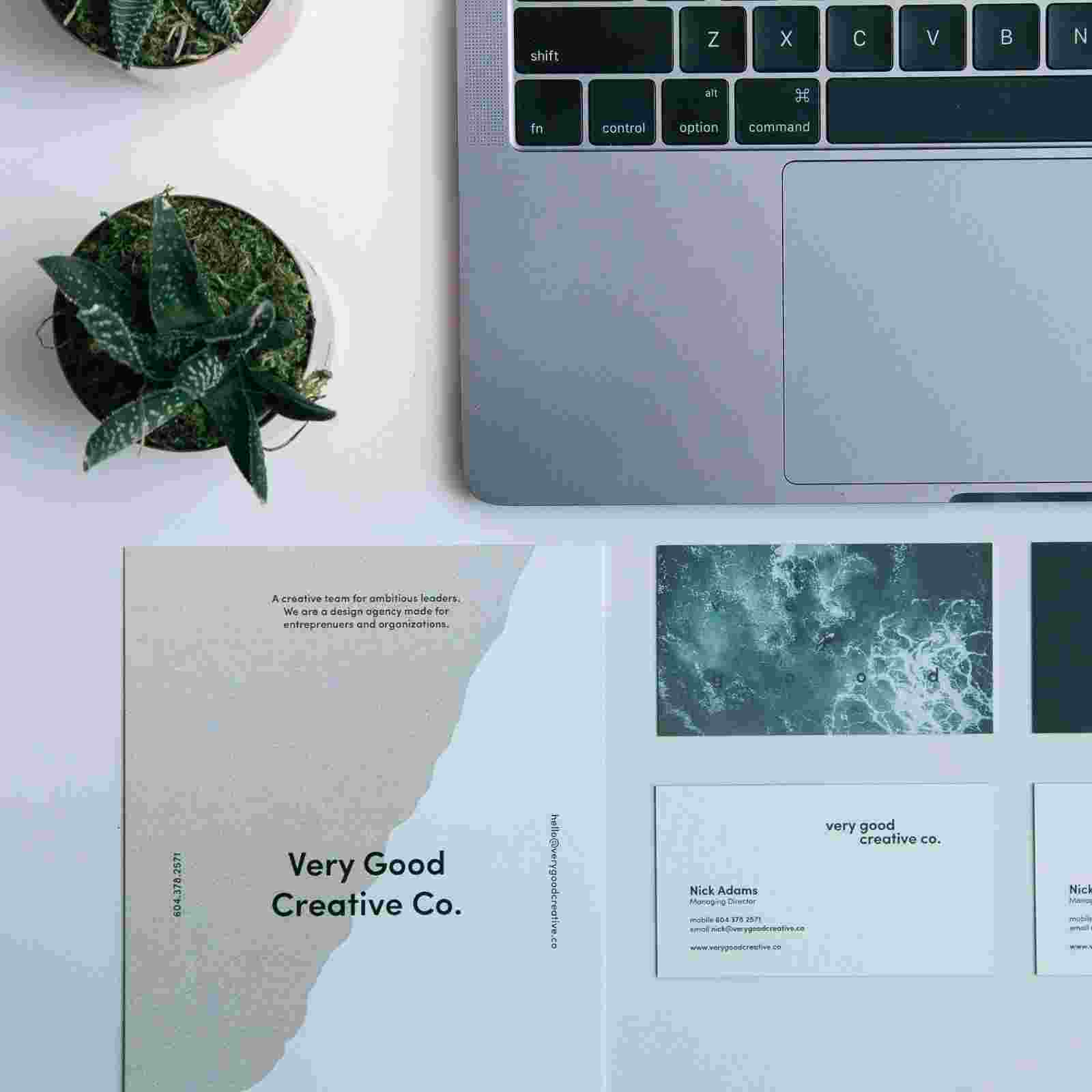
How to make a professional portfolio to attract clients:
The best portfolios are generally focused, contain work samples with context, and have no general statements. As a freelance professional, this is essential, regardless of the industry – graphic design, writing, web development, photography, video editing, marketing, etc. And for good reason: When a potential client visits your portfolio, they are likely to ask themselves one question: “Can this person solve my problem?”
This means that a professional portfolio should not be made of your best-looking work only. It must showcase your skills in an applicable, interesting, and educational manner. It has become a more competitive freelance market! How can you get noticed when you’re not the best? With a professional portfolio!
What Is a Professional Portfolio?

professional portfolio is a presentation and compilation of work, skills, and other pertinent content in a certain style. This may be a portfolio website, a personal website, a PDF, or a professional portfolio page on a special website. An effective online portfolio is more than a collection of work, however – it is a communication:
- Who you are;
- What services you offer
- and who you help;
- What Problem(s) you’re going to solve;
- How you work; How you behave in the workplace;
- And how your client can get in touch with you.
And how your client can get in touch with you. When you’re not there to introduce yourself to a potential client, the time to think of your portfolio as an introduction is when you are.
1-Select the preference of people that you want to target:
A frequent mistake is to aim for everyone. Take designers, for example: logos, social media graphics, packaging, illustrations, websites, posters – you name it! But showcasing everything can confuse your audience.
Instead, focus on your ideal customer. If you’re dealing with small businesses, you can have work in your portfolio that is relevant:
- Business branding
- Social media graphics
- Website design
- Marketing materials
- Promotional graphics
Your work samples as a writer would be whatever you wrote, whether it be in a blog, on a website, product descriptions,s or anything involving finance. Your portfolio needs to be viewed by your client, and one has to be capable of understanding who you are and what you do.
2- Define a Clear Job & provide a Professional Position:
Your position statement should be brief, clear, and to the point; think about who will be reading your statement and what you’ll say to them.
Don’t use general language that applies to all:
“Business solutions that are creative.”
Rather, do the opposite—such as:
I am a social media professional copywriter for small businesses creating professional visual content for their website and social media. This way, your statement conveys your value proposition: Small Businesses, Visual Content, Websites and Social Media.
It is particularly crucial when it comes to your freelance portfolio, since potential customers would probably be looking around for several different options before deciding. Again, a concise position statement is better suited than a pretty paragraph.
3-Select Your Best Work:
Not All Your Work. A very simple and one of the most neglected portfolio tips is that it’s quality rather than quantity. You don’t have to present all of your projects – just ones that demonstrate your abilities and work. For example, if you have completed 30 projects, but only 5 are your best, it would be better to highlight only the 5 – making a better impression – than all 30 projects.
When selecting a project to add to your portfolio, there are a few points that you should keep in mind:
- Is this relevant to the clients I want to attract?
- Does it demonstrate a valuable skill?
- Does it provide variety, without being confusing?
Your portfolio should be a collection of the type of work you wish to have in the future.
4- Create Case Studies of Projects:

It’s a far better portfolio if you have a story behind a project. Instead of simply displaying an image and a title, invest time in a short case study.
A good case study contains the following:
The Client: Who did you work for?
The Problem: What were the objectives?
The Approach: How did you approach it?
The Problem solution: Have you provided a solution to the problem?
At the point ”the result”: What was the result of all that?
In this manner, you don’t have to ask the prospective client what you can do for them, but rather give them ideas about what they need to do for themselves.
5-Describe the problem first and then present the solution:
Most clients care about results and impact, rather than appearance. As a web designer, for instance, giving the project name and description will not suffice. Rather, give a brief description of the context and the result. For example: This website has been redesigned to be user-friendly and effective for users who access it from a mobile device, as the original was not accessible to users on mobile devices and was not clear about the services offered.
The redesign focused on improved information architecture and a simpler mobile experience.”This transforms your portfolio from an exhibition of work samples into a demonstration of your expertise and value proposition – and that is the most important difference between a standard portfolio and a professional portfolio that actually converts clients.
6. Show Your Working Process:
Process transparency is a factor for many clients when they select a freelancer. Your likely client might want to view how you do your work prior to hiring you. Thankfully, your portfolio will serve as a reference.
Simply describe your working process briefly:
- Initial discussion
- Understanding the brief
- Research
- First concepts/drafts
- Feedback incorporated;
- Deliverables provided to the client.
Your working process does not need to be fancy – the key point is to demonstrate that you are methodical, rather than flying by the seat of your pants.
7- Make Your Portfolio Easy to Access and Approachable :
A potential client should be able to understand your portfolio at first glance.
Consider having the following in your primary navigation bar:
- Home;
- Portfolio;
- Services;
- About;
- Testimonials;
- Contact.
If you want to add more categories, do so – but don’t make it too complicated. An important point regarding your website is that when a potential client reaches out to you, the process should not be difficult; they should not have to navigate through excessive clicks or multiple pages just to access you or find your contact information. A simple website is designed to answer the following questions.
- Introduce yourself or your business.
- Express your services and skills clearly.
If a visitor can’t work out the answer to his questions, then he will be confused and either abandon your site, or he’ll be a little suspicious, which will stop him from buying your services.
8-Make Your Portfolio Mobile-Friendly:

It is not uncommon for a portfolio to look great on a desktop but break on a mobile phone – defeating the primary objective of a mobile-friendly design.
According to Statista’s compilation of StatCounter data, mobile accounted for 51.48% of global website traffic in the second quarter of 2026. (Statista)
So, before launching your portfolio, it is essential to check :
- Smartphone;
- Tablet;
- Laptop;
- Desktop.
9-Help the person who comes to your website:
Make your contact information so easily accessible and reachable that any visitor faces no difficulty in contacting you.
Some typical call to action buttons are:
“Request a Quote,” “Discuss Your Project,” “Contact Me,” “View My Services,” “Start a Project.”
Call to action buttons must always be connected with your website goal.IF any client wants to know about your service prices, they must be able to find it very easily.
10-Create Sample Projects If You Are New to the Market:
One of the most common reasons people do not have a portfolio is the
newbie cycle
There’s no need to have dozens of clients when creating a portfolio. You can also create sample projects, or request to work on somepro bonoo tasks.
For instance, you can have a whole business portfolio for a fictional restaurant brand, social media content, logo, package design, a website homepage, and so on, if you are a graphic designer. As a writer, you can write and publish sample blog posts, product descriptions, website copy, email copy, industry guides, etc. Be sure to say whether a project is a sample or personal project. Don’t pretend that the fictional project was done for someone else or that one that you did was done for a client.
11. Use your portfolio when contacting clients:
After you develop a portfolio, it’s essential to keep using it when talking to prospective clients.
When you call a small business owner and ask them to make some social media graphics, don’t say “Hi, I am a graphic designer” because that is a common mistake. Briefly describe what the problem is and invite the client to see similar projects in your portfolio.
“I’ve noticed that some of your recent social media posts have multiple graphics. I help small businesses with consistent social media design, and I have a few samples in my portfolio.”
12-Update your portfolio continually; check it always:
If you have dramatically improved your abilities, then it’s time for a new portfolio. If you have developed skills since starting to create your portfolio, then if you use an old one,e you sound like a beginner.
Avoid Common Portfolio Pitfalls:
There are several common mistakes that can hamper even the most excellent portfolio. They include:
1-Too much information: Do not use a lot of paragraphs of text and don’t have hundreds of projects in your portfolio. There are two types of images that you should avoid:
2-Low-quality images: Don’t let your images look amateurish.
3-Be clear about the services you provide: Make sure that clients easily understand the services provided
4-Generic statements: Do not use clichés and common sayings, for example, “I am a passionate, hardworking, and creative professional”
5- No call to action: If the visitor can’t figure out what he/she should do after seeing your portfolio, you missed something big
6- No authenticity: Never fake testimonials, clients, numbers, or anything else.
Simple and Practical Portfolio Structure:
The mind doesn’t know why he has to make so many pages for his first portfolio. But it is not necessary to create a lot of pages to build a professional portfolio — just a few key useful pages will suffice to show potential clients what you can do and what you have done. For example, on the homepage, you are introduced (what you do), and your best work is shown (what you’re good at).
Portfolio: Your best work organized by service or other criteria
Case studies: Information about your best projects
About: Details about your professional experience, skills, and approach
Services: An overview of what you offer
Testimonials: Past clients’ opinions of you
A person’s way of contacting you: How prospects will be able to contact you.
It’s a basic format structure that many freelance and small business owners adhere to. It is also ideal for a portfolio and will only include the most important information, which is free from cluttering data on the website.
Your portfolio should be client-focused and include these elements:
An easy way to optimize your portfolio is to imagine that you are a prospective client
What kind of things should they have in their portfolio if they’re getting ready to hire a potential candidate? I am sure you’ll want to know the following:
- Can the candidate fulfill the task?
- Has the candidate done similar projects?
- Do they understand my requirements?
- What is their process like?
How can clients reach you?
Your portfolio should be able to give a clear and concise answer to such a question or have an answer to it. As always, it’s important to keep in mind that the user of a portfolio should be the focus and not the owner of the portfolio. This will make it easier for you to optimize your portfolio and turn it into a powerful message about what you can do and where you come from.
The definitive guide to creating a website portfolio that clients love:
The term ‘converts’ is a very simple one – meaning ‘to convert ‘- and is often used for a visitor taking a specific action – in this case, to contact you. This is the guide that I am telling:
- My portfolio tells what I do.
- I understand who my target clients are
- I have highlighted my best and most relevant work
- My projects have the right context
- I have explained my process
- My About page sounds professional
- I have clearly stated the services offered
- My portfolio looks good on a mobile phone
- My images are of high quality and responsive
- My contact details are easy to find
- I have a strong call to action
- Testimonials are credible
- Results are realistic
- I have not exaggerated
- My portfolio does not make me look like an amateur
Final Notes:

The freelance landscape is continually changing, as are the expectations of the people who are looking for freelance help. One of the most important shifts that have taken place over the past few years is the expectation that skills can be demonstrated in terms of measurable value, rather than skills in a specific area. In the end, I would say it is not difficult to build a professional portfolio that converts clients; you just need the right skills and a simple working plan to become good in this field.